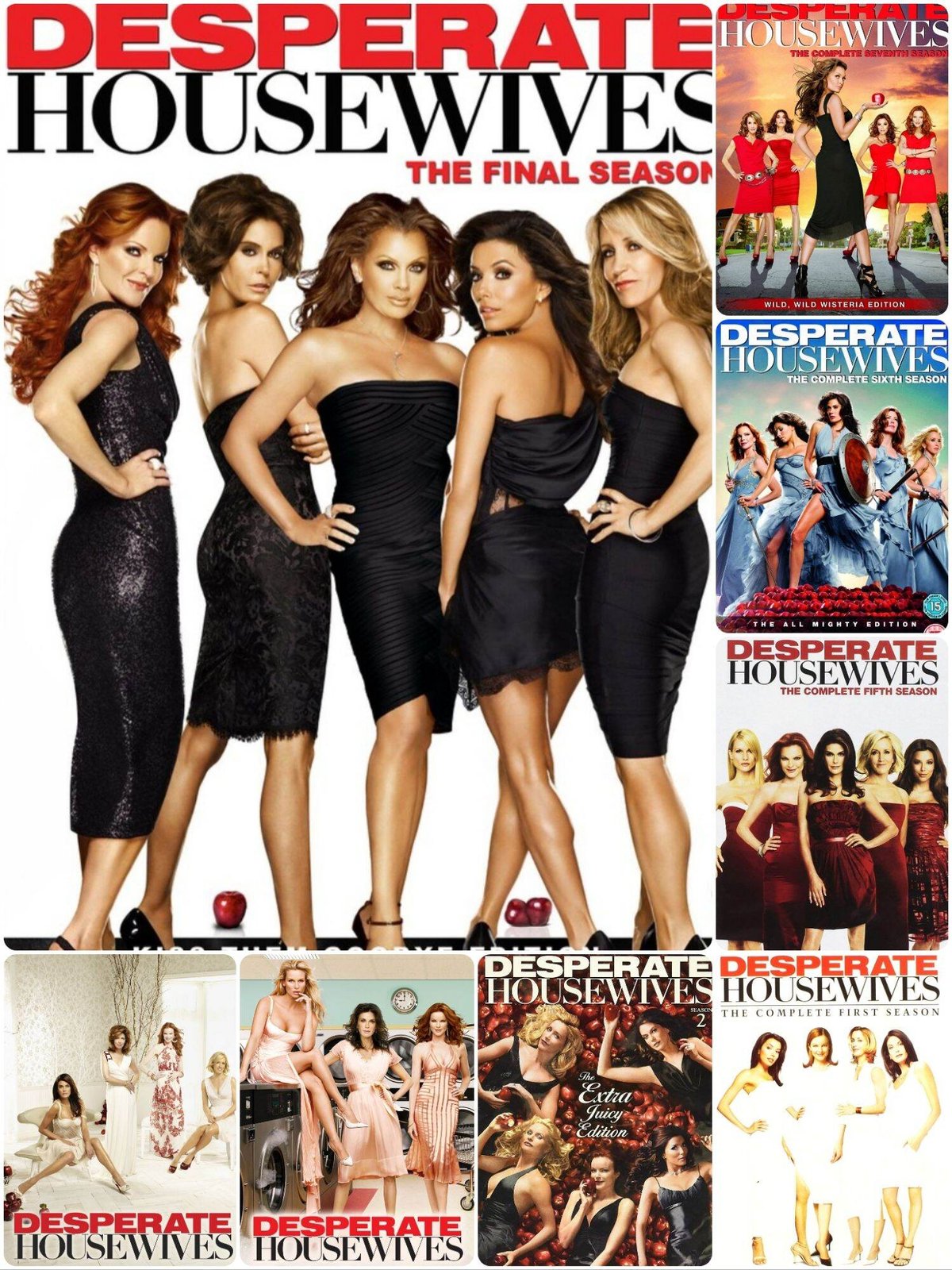
When you think about the golden age of Wisteria Lane, do you immediately picture Bree Van de Kamp navigating a sinister new marriage, or Gabrielle Solis grappling with the complexities of divorce and a surprising new love interest? For many fans and critics alike, Desperate Housewives Series 3 wasn't just another chapter; it was a pivotal season that deepened the mystery, escalated the drama, and further cemented the show's place in pop culture. This season, running from 2006 to 2007, marked a significant evolution for our favorite suburbanites, prompting a wide array of [Desperate Housewives Series 3 Reviews & Fan Reception] that shaped its legacy.
It's a season often recalled for its darker tone, the introduction of compelling new characters, and a shift in how its leading ladies dealt with their increasingly complex lives. You might find yourself arguing about whether Susan's romantic woes became tiresome or if Bree's storyline reached new, deliciously dark heights. Let's peel back the layers and truly understand what made Series 3 tick for audiences and critics.
At a Glance: Desperate Housewives Series 3
- Pivotal Shifts: The season marked a notable tonal shift, embracing darker themes and more intense drama.
- Bree Takes Center Stage: Marcia Cross's performance as Bree Van de Kamp marrying Orson Hodge and confronting his past was widely lauded as the season's strongest arc.
- Character Evolution: Gabrielle Solis experienced significant personal growth, while Lynette Scavo tackled serious health and family issues.
- Fan Divides: Susan Mayer's storyline, particularly her love triangle, often polarized fans.
- Critical Acclaim: Praised for its continued blend of dark comedy, mystery, and strong performances, particularly from the lead actresses.
- Enduring Legacy: Solidified the show's reputation for compelling character-driven drama infused with suburban intrigue.
The Great Wisteria Lane Divide: Critics vs. Fans
Desperate Housewives has always existed in an intriguing space, loved by millions yet often approached with a nuanced eye by professional critics. Series 3 was no exception, showcasing a fascinating divergence and convergence in how its narratives were perceived. Critics often lauded the show's ability to maintain its unique blend of dark comedy, melodrama, and mystery, pointing to strong writing and stellar performances. Fans, on the other hand, brought a more personal investment, celebrating character development while sometimes expressing frustration with repetitive plotlines or character choices.
This season arguably saw the show at its most daring, pushing its beloved characters into scenarios that were both heartbreaking and hilarious. You'll find few discussions about [Explore Desperate Housewives Series 3] that don't delve into the dramatic heft this particular run brought to the table.
What Critics Applauded: Sharp Writing and Stellar Performances
Seasoned television critics often highlighted the continued strength of Marc Cherry's writing team. They praised the intricate plotting, the witty dialogue, and the seamless way the show wove together domestic struggles with overarching mysteries. The series managed to deepen the backstories of its core characters, providing them with rich, complex material that actors could truly sink their teeth into.
Performances, especially from Marcia Cross (Bree) and Felicity Huffman (Lynette), were frequently singled out for their depth and nuance. Cross, in particular, was commended for her portrayal of Bree's descent into a shadowy new marriage, handling the material with a captivating blend of fragility and steel. Eva Longoria's [Gabrielle Solis's character evolution] from a self-absorbed model to a woman navigating divorce and motherhood also garnered significant praise for its comedic timing and emotional honesty.
Where Fans Weighed In: Love, Frustration, and Unforgettable Moments
Online forums and fan communities buzzed with discussions about Series 3, showcasing a vibrant, engaged audience. Fans celebrated the return to form after what some perceived as a slight dip in the previous season. They cheered for moments of triumph, commiserated over heartbreak, and debated every twist and turn.
However, fan reception wasn't without its criticisms. While overall sentiment was positive, specific storylines or character arcs sometimes drew ire. The ongoing romantic entanglements of Susan Mayer, for instance, often led to lively debates, with some viewers expressing exasperation at her perceived lack of growth or her repeated poor choices in relationships. Despite these points of contention, the season delivered numerous memorable episodes and iconic scenes that became instant fan favorites.
Unpacking the Major Arcs: A Season of Transformation
Series 3 distinguished itself by delivering some of the most memorable and transformative storylines for its central housewives. Each woman faced unique trials that tested their limits, revealing new facets of their personalities and pushing the boundaries of suburban drama.
Bree Van de Kamp's Dark Fairy Tale: The Orson Hodge Mystery
Without a doubt, the central pillar of Series 3 was Bree Van de Kamp's journey. Following her tumultuous second season, Bree finds love again with the charming and enigmatic dentist, Orson Hodge. Their relationship, however, quickly unravels into a twisted tale of murder, secrets, and psychological manipulation.
You see Bree, ever the picture of perfection, grappling with the knowledge of Orson's dark past and his sinister mother, Gloria. This storyline became a masterclass in gothic melodrama, earning critical acclaim for its tension, suspense, and Marcia Cross's brilliant performance. Fans were captivated by the slow reveal of Orson's secrets, the eerie presence of Gloria, and Bree's desperate attempts to maintain her perfect facade amidst the chaos. It was a bold move for the show, leaning heavily into the "desperate" aspect of its title and delivering one of [Bree Van de Kamp's most dramatic arcs].
- Key Moments: The revelation of Orson's hit-and-run on Mike Delfino, Gloria Hodge's murderous plot, Bree's "fake" pregnancy to protect Danielle.
- Fan & Critic Consensus: Almost universally praised as the strongest and most compelling storyline of the season. It provided a perfect blend of mystery, character development, and high stakes.
Gabrielle Solis: Finding Her Footing Beyond Carlos
Gabrielle Solis began Series 3 navigating the aftermath of her divorce from Carlos, and her efforts to build a life independent of his wealth and influence. This season saw a marked maturation for Gaby, as she grappled with financial struggles, a surprise affair with her ex-gardener John Rowland, and eventually a new, ill-fated marriage to Mayor Victor Lang.
The storyline where Gaby takes in her former maid's baby, Lily, and later battles for adoption rights, showcased a surprisingly maternal and compassionate side to her character. It was a refreshing change for viewers accustomed to her more superficial antics, proving her depth. [Gabrielle Solis's character evolution] throughout this period was a highlight for many, demonstrating her growth while still retaining her signature wit and sharp tongue.
- Key Moments: The post-divorce financial struggles, the rekindled affair with John, her relationship with Lily, and the start of her turbulent marriage to Victor.
- Fan & Critic Consensus: Largely positive. Viewers enjoyed seeing Gaby mature and take on new challenges, proving she was more than just a trophy wife.
Lynette Scavo: A Battle for Family and Health
Lynette Scavo's Series 3 journey was arguably the most emotionally resonant. Initially faking cancer to prevent her mother-in-law Stella from moving in, Lynette soon faced a very real battle with non-Hodgkin's lymphoma. This storyline delved deep into the emotional and physical toll of cancer, not just on Lynette but on her entire family.
Felicity Huffman delivered a powerhouse performance, capturing Lynette's vulnerability, resilience, and unwavering dedication to her children. The season also introduced Tom's manipulative ex-wife, Nora Huntington, and their daughter, Kayla, adding new layers of conflict to the already strained Scavo household. [Lynette Scavo's struggle for balance] between managing her illness, her children, and her husband's new business venture was relatable and deeply moving for many.
- Key Moments: Lynette's cancer diagnosis and treatment, the arrival of Nora and Kayla, the emotional impact on Tom and the children.
- Fan & Critic Consensus: Highly praised for its realism, emotional depth, and Huffman's exceptional acting. It was often cited as one of the show's bravest and most heartfelt storylines.
Susan Mayer: The Never-Ending Love Triangle
Ah, Susan Mayer. While her friends were facing murder charges and cancer diagnoses, Susan found herself in yet another complicated love triangle. This time, it was between the charming British suitor Ian Hainsworth and her comatose love, Mike Delfino.
Many fans found [the ongoing saga of Susan and Mike] to be a source of frustration, feeling that Susan's character often regressed or made impulsive, immature decisions. Her indecision between Ian and Mike, coupled with some melodramatic plot devices (like Mike's amnesia), sometimes tested the patience of viewers who desired more significant growth for the character.
- Key Moments: Mike's coma and amnesia, Susan's engagement to Ian, the constant back-and-forth between her two loves.
- Fan & Critic Consensus: Mixed. While some appreciated the romantic drama, many felt Susan's storyline was repetitive and lacked the depth of the other housewives' arcs. It often led to debates about whether Susan was the least developed character.
Edie Britt: The Vixen's Vulnerability
Edie Britt, Wisteria Lane's resident man-eater, also had a surprisingly vulnerable arc in Series 3. Following Carlos Solis's divorce from Gabrielle, Edie sets her sights on him, leading to a complex relationship that revealed glimpses of her longing for genuine connection and stability.
However, Edie's desperate attempts to hold onto Carlos, including a fake suicide attempt, ultimately backfired. This storyline further explored the complexities beneath Edie's tough exterior, showing her more human, albeit still manipulative, side. Nicollette Sheridan brought her characteristic sass and comedic timing to the role, even in its darker moments.
- Key Moments: Her relationship with Carlos, the fake suicide attempt, her subsequent struggles with her image.
- Fan & Critic Consensus: Generally positive. Edie continued to be a beloved antagonist, and her vulnerability added interesting layers to her character, even if her actions were questionable.
The Overarching Mystery: Orson's Past and the Shadow of Gloria Hodge
Beyond the individual character arcs, Desperate Housewives always delivered a season-long mystery, and Series 3 was no different. While the previous season's Applewhite mystery was largely resolved, this season kicked off by delving deeper into the shadowy past of Orson Hodge.
The initial mystery revolved around Orson's history and his connection to the hit-and-run that put Mike Delfino in a coma. As the season progressed, the narrative introduced Orson's sinister mother, Gloria Hodge, and his former wife, Alma. This storyline brought a chilling, almost psychological thriller element to the show, with Gloria proving to be one of Wisteria Lane's most cold-blooded villains. The escalating suspense and the danger Bree found herself in provided a compelling backbone for [the enduring mysteries of Wisteria Lane].
- Impact: The mystery served to tightly weave Bree's personal struggles with the larger Wisteria Lane narrative, culminating in a dramatic and satisfying resolution that directly impacted Mike's recovery.
- Fan & Critic Consensus: Generally well-received. The mystery was seen as engaging, well-paced, and effectively integrated into the show's signature style.
Pacing, Tone, and Lasting Impressions
Desperate Housewives Series 3 marked a discernible shift in pacing and tone for the series. While still maintaining its comedic elements, the season embraced a darker, more dramatic edge, particularly with Bree's and Lynette's storylines. This heavier tone resonated with many critics who appreciated the show's willingness to delve into more mature and serious themes.
The season's structure, with its focus on Orson's mystery intertwined with the personal struggles of the housewives, felt cohesive and well-executed. Some fans, however, felt a slight mid-season lull or found certain subplots (like Susan's constant romantic dilemma) to drag on.
The "Slippery Slope" Argument: Was Season 3 the Beginning of the End, or a Peak?
One common question among long-time fans is whether Series 3 represented a creative peak or if it subtly introduced elements that would lead to later seasons' perceived decline. The consensus, both critically and among fans, leans heavily towards it being one of the strongest seasons.
While later seasons sometimes struggled with maintaining consistent quality or introducing increasingly outlandish plotlines, Series 3 generally kept its narratives grounded in character development while still delivering signature Desperate Housewives twists. It successfully balanced the show's trademark blend of humor, heart, and suspense, making it a benchmark for future seasons. The way it handled profound issues like cancer, divorce, and domestic violence within its dark comedic framework was particularly noteworthy.
Unforgettable Moments and Cultural Impact
Beyond the overarching plots, Series 3 gifted audiences with several iconic moments that have remained etched in the show's history:
- The Supermarket Shooting: A shocking and intense episode that saw a disgruntled former employee hold several Wisteria Lane residents hostage, culminating in tragedy. This episode was a dramatic high point, praised for its tension and emotional impact.
- Bree's Pregnancy Scheme: Her decision to fake a pregnancy to protect Danielle's reputation was a darkly comedic and utterly Bree moment.
- Gaby's Financial Struggles: Watching Gaby attempt to work and deal with everyday financial realities was both humorous and endearing.
- Lynette's Chemo Journey: Her realistic portrayal of living with cancer brought a profound sense of gravity and relatability.
These moments, among many others, highlight the season's ability to oscillate between gut-wrenching drama and laugh-out-loud comedy, a hallmark of the show's enduring appeal.
Your Thoughts Matter: Continuing the Conversation
The enduring appeal of Desperate Housewives Series 3 lies not just in its compelling narratives and exceptional performances, but in its ability to spark conversation. Whether you're revisiting Wisteria Lane for the tenth time or discovering its secrets for the first time, this season offers a rich tapestry of drama, humor, and intrigue.
Did you find Bree's storyline a masterpiece of dark comedy, or did Orson's secrets drag on too long? Was Gabrielle's journey of self-discovery her best arc, or did you miss her more glamorous antics? The beauty of a show like Desperate Housewives is how deeply it connects with its audience, making every viewer a critic and a fan rolled into one. Series 3 certainly gave us plenty to talk about, solidifyiing its place as a beloved, if sometimes controversial, chapter in the lives of our favorite desperate housewives. So, grab your preferred beverage, settle back, and perhaps consider a rewatch – you might find new layers of brilliance, or new points of contention, to discuss.
Untuk pemahaman lebih lengkap, baca panduan utama kami: Explore Desperate Housewives Series 3